

EASA Part-145 in & the EASA MOE Transparency Gap
Regulatory Harmonisation vs Operational Reality: Part-66, Part-145 and the MOE Transparency Gap
EASA Part-145 in & the EASA MOE Transparency Gap Read More »
Regulatory Harmonisation vs Operational Reality: Part-66, Part-145 and the MOE Transparency Gap
EASA Part-145 in & the EASA MOE Transparency Gap Read More »

The global aviation industry operates on a paradox: while the aircraft are technically identical, the “safety value” of the personnel maintaining them is governed by legal jurisdiction and regional oversight. Training & the same course, different legal weight If you train three engineers on the same Boeing 787 course, their utility is dictated by their
Aviation Maintenance Standards, Jurasdictions and Learning Read More »

The aviation industry is hitting a wall, while the media focuses on pilots, the real bottleneck for 2026 is the Certifying Staff shortage. Boeing projects a global need for 710,000 new maintenance technicians over the next 20 years. Experienced certifying and non certifying staff have many options for jobs and offers from employers, keeping staff
The 2026 Engineering Crisis: A Market in “AOG” Read More »

The interaction between Navigation (Nav) Costs and environmental charges creates an incentive structure where airlines often burn more fuel—and create more pollution—specifically to save money. To understand the conflict, we must distinguish the mechanisms of the two main charges: * Nav Costs (The Service Fee): These are “tolls” paid to Air Navigation Service Providers (ANSPs)
The Conflict: Environmental Intent vs. Financial Reality Read More »
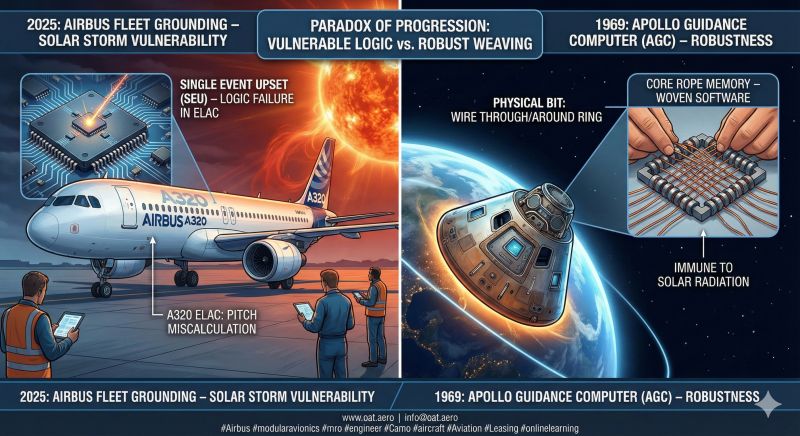
In 2025, a solar storm managed to ground a significant portion of the global Airbus fleet, but in 1969, flying outside the protection of Earths magnetic field, the Apollo Guidance Computer (AGC) didn’t have any issues; so what is vulnerable in Airbus and is it isolated? The Vulnerable Architecture in this case is the ELAC,
Airbus fleet grounding – but Apollo missions didn’t have any problems… Read More »

If you work in aviation—whether you are signing the Certificate of Release to Service, managing the Continuing Airworthiness, or negotiating the lease terms—you likely view a commercial aircraft as a known quantity from your specific standpoint. It is a collection of parts, components, chapters, a sum of flight cycles and flying hours, and a precise
An Invisible Conversation at 35,000 Feet Read More »

Historically, aircraft with three (trijets) and four (quadjets) engines held a significant advantage over twin-engine jets for long-haul, transoceanic flights. This superiority was primarily rooted in mechanical redundancy and a stringent regulatory restriction: the “60-minute rule.” Before the mid-1980s, jet engines were less reliable, and aviation regulators, notably the FAA, stipulated that a twin-jet’s flight
Quad-Jets to Twin-Jets: The Evolution of Global Flight Safety Read More »
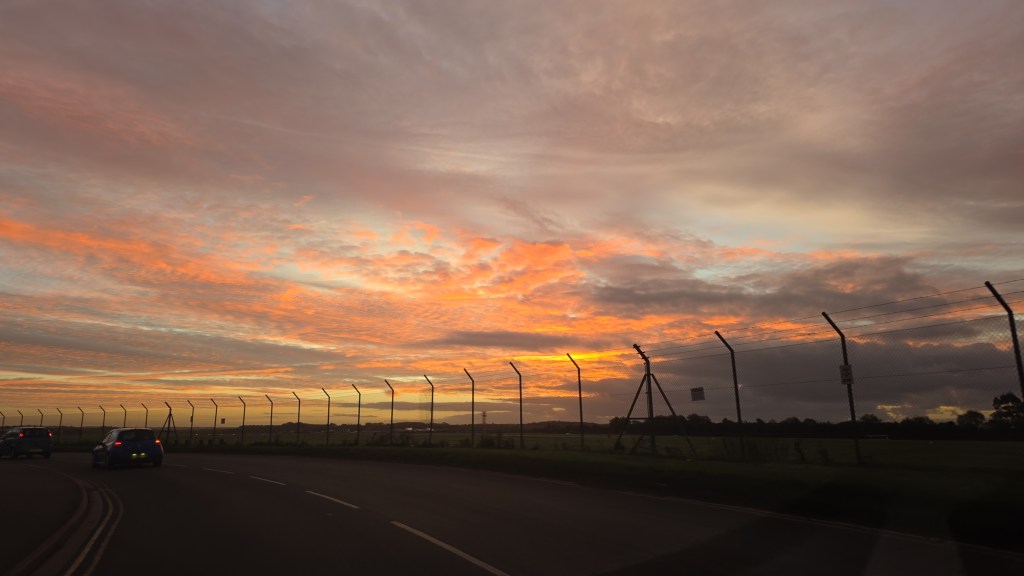
The planning and execution for technical flights, such as Maintenance Check Flights (MCF) and often lease acceptance flights, require attention to detail with regulatory compliance, particularly when operating under Part NCC (Non-Commercial Complex) or Part SPO (Specialised Operations) with the UK CAA and EASA. Technical Flight Solutions Ltd (TFS), operating under the supervision of the
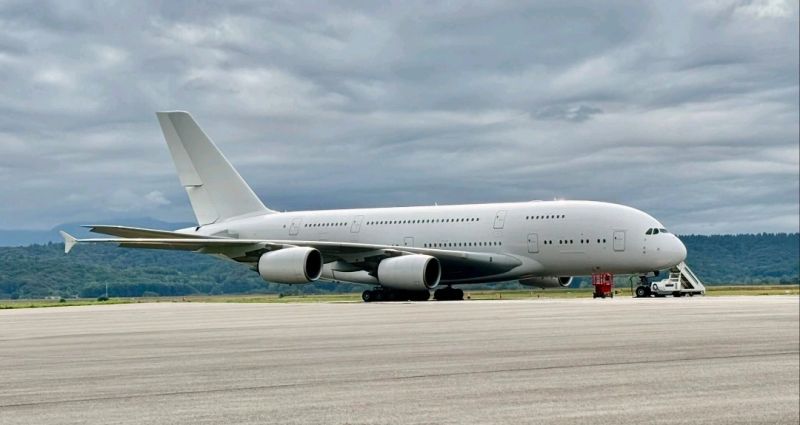
The Airbus A380, once destined for the aviation graveyard following the pandemic-induced travel slump, is experiencing an unexpected and complicated resurgence. The global rebound in air travel, especially on high-density routes and in slot-constrained airports, has forced several major carriers to re-evaluate the superjumbo’s utility. Airlines like Emirates and Qantas have committed to bringing more
The Resurrection of the Superjumbo: Is the A380’s Second Act a Bargain? Read More »

US airlines are making significant, multi-faceted investments to address critical issues related to cabin air quality and the long-term reliability of next-generation engines like those powering the Airbus NEO (New Engine Option) family. These expenditures fall primarily into two categories: mitigating the risk of toxic fumes in the cabin and ensuring the durability of modern,
Fumes in cabin and prevention. Read More »