
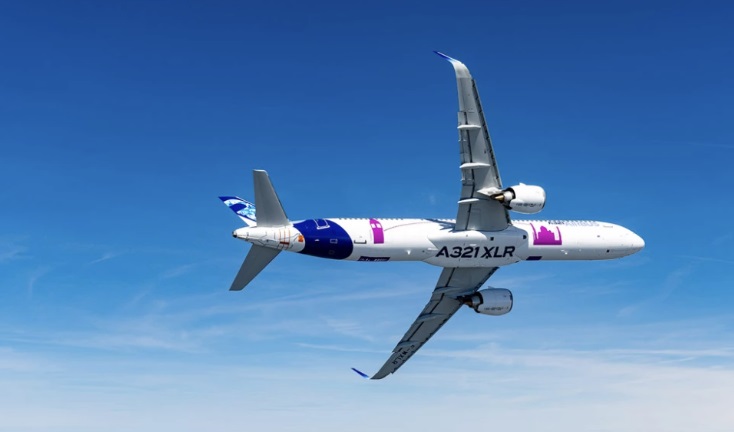
The Airbus A320, now a reliable and depended narrowbody, like all aircraft has a history. The type has had many variants A318-A321 and many different engines such as the CFM56, V2500, PW6000, PW1100 and CFM Leap. The aircraft came from development, had an early pivotal crash and found success there after and new life with the technological evolution to the “neo” (New Engine Option)
- Market Need: In the 1980s, Airbus sought to compete directly with the Boeing 737 in the lucrative short-to-medium haul airliner market. The A320 was envisioned as a technologically advanced, fuel-efficient rival.
- Fly-By-Wire: The A320 was groundbreaking. It was the first commercial airliner with a full digital fly-by-wire (FBW) flight control system. This replaced traditional mechanical/hydraulic controls with electronic signals and computer-mediated flight envelope protections.
- Commonality & Efficiency: The A320 became the foundation of an entire family of aircraft (A318, A319, A321). This “commonality” allowed pilot cross-qualification and reduced maintenance costs for airlines.
- Engines: Initially, A320s used CFM56 turbofans known for their reliability. Later, the IAE V2500 became an option, offering slightly improved performance.
The Crash: Air France Flight 296
- Date: June 26th, 1988 at an airshow in Habsheim, France
- Circumstances: A low-speed, low-altitude flyover with insufficient engine thrust and inadequate understanding of FBW safeguards led to the aircraft stalling and crashing into trees at the end of the runway.
- Consequences: The highly-publicized crash raised questions about FBW safety and pilot reliance on automation. Investigations revealed a confluence of factors:
- Pilot error in misjudging energy state and aircraft trajectory
- FBW system failing to override clearly unsafe pilot inputs
- Confusion about FBW modes and a lack of clear warnings
Fixes and the A320neo Evolution
- Software Changes: Airbus modified the FBW’s “Alpha Floor” protection, which is meant to automatically increase power if a stall is imminent. Changes made it more difficult to override and provided better cues to the pilot about system behaviour.
- Pilot Training: Emphasized stall recognition and recovery in all flight regimes. Also focused on the nuances of FBW systems and the importance of manual flying skill retention.
- Neo (“New Engine Option”): Decades later, Airbus launched the A320neo family. This brought:
- New-generation engines (Pratt & Whitney PW1000G or CFM LEAP-1A) with radical fuel savings.
- Sharklets (wingtip devices) to reduce drag.
- Aerodynamic refinements and systems updates.
A320 Success: Despite the early setback, the A320 family achieved tremendous commercial success. It remains one of the world’s best-selling airliners, renowned for reliability and a key competitor to the Boeing 737.
If you want to learn more follow us on LinkedIn and why not consider our A320 general familiarisation (genfam) covering the CEO and NEO options available in 40 Hr and 80 Hr Ramp and Transit versions