
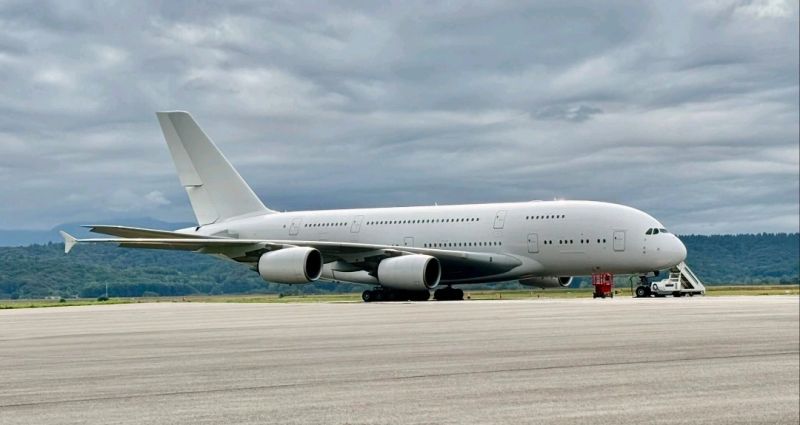
The Airbus A380, once destined for the aviation graveyard following the pandemic-induced travel slump, is experiencing an unexpected and complicated resurgence.
The global rebound in air travel, especially on high-density routes and in slot-constrained airports, has forced several major carriers to re-evaluate the superjumbo’s utility.
Airlines like Emirates and Qantas have committed to bringing more of their grounded A380s back into service, leveraging the aircraft’s immense capacity to meet soaring passenger demand.
This revival is not without drama as the journey from long-term storage, often in dry-air facilities like Teruel (which has seen A380s from Etihad and Lufthansa), to active service is a complex, costly, and labor-intensive process, as evidenced by a recent Qantas A380 returning to Dresden for heavy maintenance.
Adding to the intrigue, the first-ever A380 prototype recently took to the skies again for testing after sitting for three years, having been repurposed by Airbus for new missions in sustainable technology.
Perhaps the most compelling story surrounds the new entrants. Global Airlines, for instance, put its sole second-hand A380 through maintenance before briefly operating a couple of flights and then sending it back to storage for its next heavy check.
This highlights the inherent challenge of operating these complex four-engine jets, even with a seemingly “cheap” entry price.
While a pre-owned A380 can be purchased for a fraction of its original over \$400 million price tag—with some airframes valued up to around \$30 million—the true cost is in the maintenance, parts, and fuel. As one industry executive noted, maintaining the colossal aircraft has become an “increasingly expensive headache.”
The Technical Challenge of Movement and Maintenance
Adding to the technical complexity of the revival it’s aircraft movement, these movements often fall to specialist firms like Technical Flight Solutions (TFS), an Irish-based company specializing in ferry and technical check flights. TFS acts as the operator for these non-commercial complex (NCC) operations, ensuring the massive aircraft is flown legally and safely to its MRO (Maintenance, Repair, and Overhaul) destination.
What do you think? Follow us on LinkedIn for more and why not check out our General Familiarisation courses if you want to learn more about the A380 www.oat.aero