
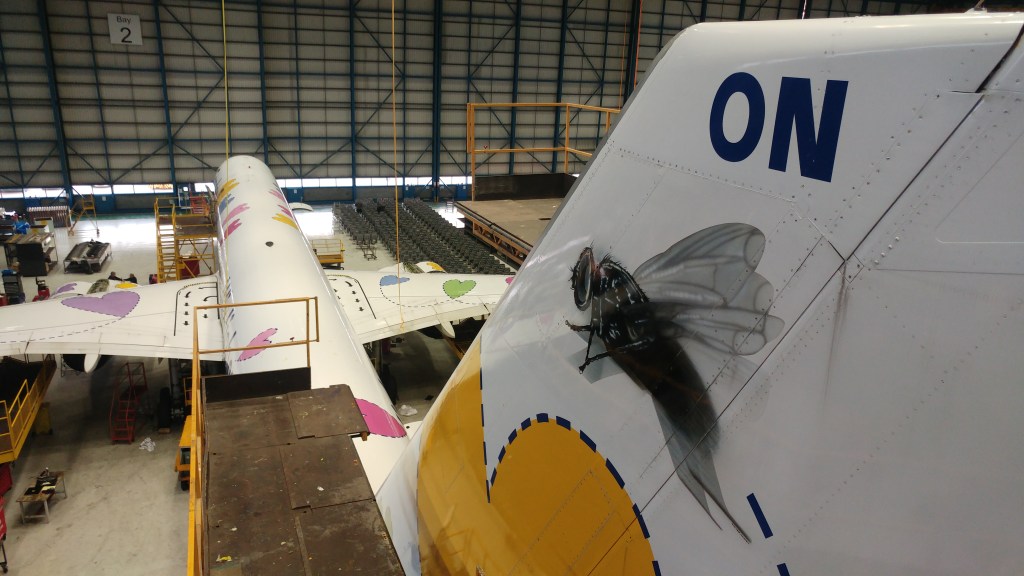
The Boeing 757, a narrow-body twinjet airliner, is truly an engineering marvel of its time. Developed as a successor to the 727, it brought together several technological advancements that cemented its place in aviation history.
Powerplants:
One of the 757’s standout features is its choice of engines. The Pratt & Whitney PW2000, notable for being the first commercial engine with a Full Authority Digital Engine Control (FADEC) system, offers remarkable fuel efficiency and power. Alternatively, the Rolls-Royce RB211, renowned for its reliability and longevity, provides exceptional thrust, particularly vital for the stretched -300 variant. Both engines grant the 757 a thrust-to-weight ratio that enables impressive takeoff performance and climb rates.
Aerodynamics and Structure:
The 757’s supercritical wing design is another engineering highlight. It allows the aircraft to achieve higher cruise speeds and greater fuel efficiency than its predecessors. The wing’s high aspect ratio contributes to its exceptional lift-to-drag ratio, enhancing its overall performance.
Structurally, the 757 utilizes advanced aluminum alloys, reducing weight while maintaining strength. This, combined with efficient systems, contributes to the aircraft’s impressive payload and range capabilities.
Systems and Avionics:
In the cockpit, the 757 boasted a state-of-the-art glass cockpit with advanced avionics. Its common type rating with the 767 further streamlines pilot training and operations. The aircraft’s systems are robust and designed for reliability, a factor that has contributed to its enduring popularity in various roles.
Performance:
The 757’s performance is nothing short of remarkable. Its range, payload capacity, and ability to operate from shorter runways make it a versatile aircraft suitable for various missions. Its high cruise speed makes it competitive on longer routes, while its ability to handle hot and high conditions is valued in challenging environments.
Legacy:
Though production ceased in 2004, the 757 continues to be a valuable asset in the aviation industry. Its performance, reliability, and versatility have made it a popular choice for both passenger and cargo operations. From transatlantic flights to regional routes, the 757’s capabilities remain unmatched in its class.
The Boeing 757 is a testament to engineering excellence. Its combination of powerful engines, advanced aerodynamics, robust structure, and sophisticated systems have created an aircraft that continues to impress and perform decades after its introduction.
Follow us on LinkedIn to learn more and if you want to learn more about the details of the Boeing 757 200/300 then why not look at our general familiarization course today