
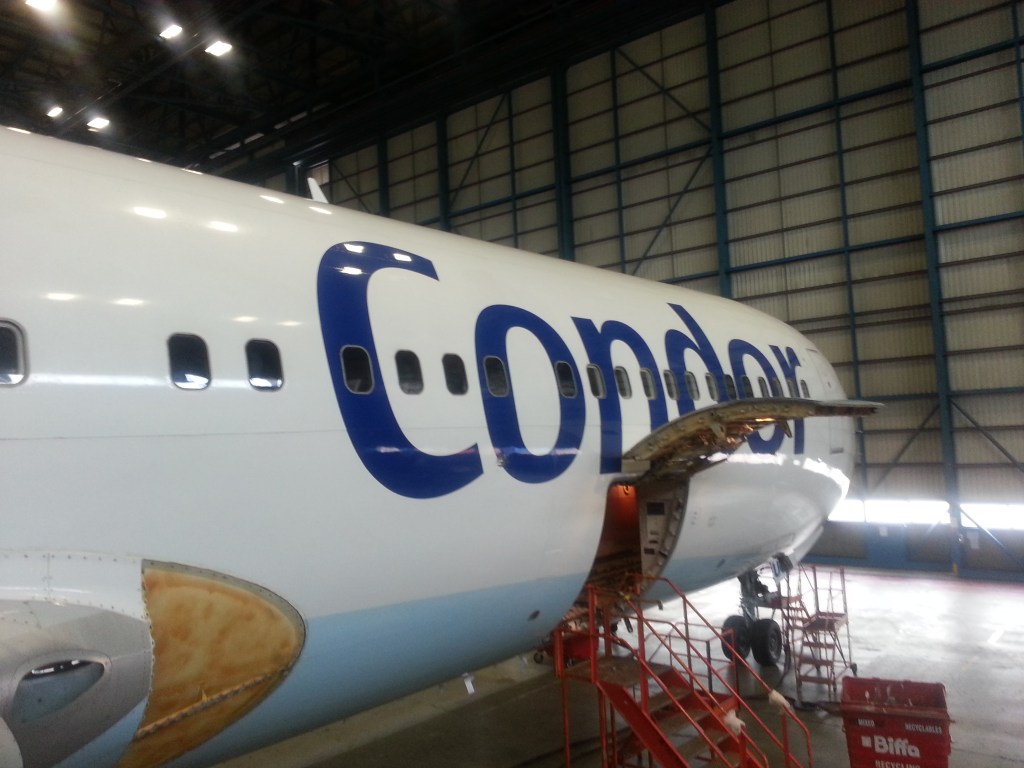
The Boeing 767, nicknamed the “workhorse” for its long service record, is a mid-sized, wide-body jet airliner that revolutionized long-haul travel in the late 1980s. Its success was significantly bolstered by the powerful and efficient Pratt & Whitney (PW) 4000 engine series and today it is still in operation and manufacture with freighter variants and indirectly the KC46 Tanker.
The 767 was designed to bridge the gap between short-haul, single-aisle aircraft and larger long-haul options. Introduced in 1982, it boasted several firsts for its time:
Evolved Wing Design: The 767 incorporated a supercritical wing, a new technology offering improved aerodynamic efficiency at cruising speeds, translating to greater range and fuel economy.
Two-Engine Reliability: Equipped with two high-bypass turbofan engines, the 767 offered excellent reliability and extended Extended-range Twin-engine Operations (ETOPS) certification, allowing it to fly longer routes over water with a single functioning engine. This was a major advancement for transatlantic travel.
PW4000 Engine Series
The PW4000 series, specifically the PW4056 and PW4060 variants, proved to be the perfect powerplant for the 767. These high-thrust turbofan engines offered:
Advanced Design: Featuring a high bypass ratio (meaning more air bypassed the core for increased efficiency) and advanced combustor technology, the PW4000 delivered exceptional fuel efficiency and lower operating costs.
Improved Performance: Compared to previous engine models, the PW4000 offered increased thrust, enabling the 767 to carry heavier payloads and fly further distances.
Unique Facts and ETOPS Prowess
Atlantic Domination
In the 1990s, the 767-300ER variant, powered by the PW4000, became the most popular aircraft for transatlantic routes due to its efficiency, ETOPS certification, and comfortable cabin layout.
Long Glide Capability: The 767’s excellent glide ratio was demonstrated following a series of errors leading to fuel exhaustion (C-GAUN). In 2003, a 767-300ER with PW4000 engines glided for over 120 miles (193 km) after dual engine failure, landing safely in the Azores.
Want to learn more, why not follow us on LinkedIn or consider our Boeing 767 General Familiarisation Course