
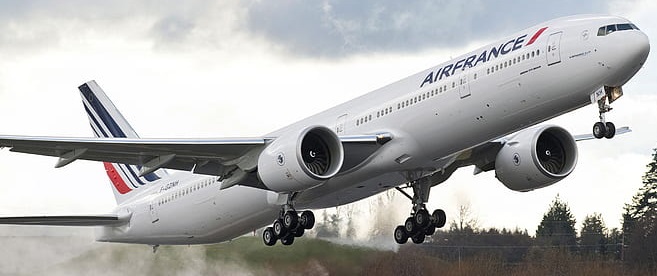
The Boeing 777’s environmental systems encompass various subsystems, including pneumatics, air conditioning, freighter air distribution, equipment cooling, cargo compartment heating and ventilation, and air supply cabin pressure control.
Pneumatics: This system, controlled by two controllers, automates operations like pneumatic system control, pressurization system control, air conditioning pack flow, and backup control. It has safety features like automatic pneumatic load removal in case of a stall, with Built-In Test Equipment (BITE) monitoring component performance down to the Line Replaceable Unit (LRU) level.
Air Conditioning: The 777 can have up to sixteen temperature control zones, managed by two controllers with dual control channels. These controllers ensure zone and pack control, supported by BITE for component testing. The system includes air bearings in the air cycle machine and a mechanical water collector, minimizing service needs. Additional features include electric heaters for extra warmth and an optional gasper system for enhanced air circulation.
Freighter Air Distribution: The freighter version has separate zones for different cargo and crew areas, with standard and optional air conditioning systems for various compartments.
Equipment Cooling: There are two cooling systems, one for the forward equipment, using supply and exhaust fans, and another for the aft equipment, using the lavatory and galley ventilation system. The forward system in freighters uses conditioned air for cooling.
Cargo Compartment Heating and Ventilation: Waste heat and hot air from the pneumatic system are used for heating cargo compartments, with ventilation allowing for animal transport in certain areas.
Air Supply Cabin Pressure Controllers (ASCPCs): These controllers manage engine bleed air supply, isolation valves, APU shutoff valves, and receive data from various systems for automatic operations. The engine bleed system has digital, analogue, and pneumatic control levels, with ASCPCs providing digital and analogue control.
Pack Air Flow: Two valves control air flow to each pack, with one operating depending on the altitude. The system uses heat exchangers and an air cycle machine (ACM) for cooling, and the cabin temperature controller (CTC) regulates the air temperature.
Distribution Air Flow (Passenger): Ground conditioned air connections are available, with air distribution managed through ducts and outlets in the passenger compartment.
Each of these systems is integral to maintaining the appropriate environmental conditions on the Boeing 777, ensuring passenger comfort and safety during flight.
Why not check out some of our courses such as the Boeing 777 general familiarisation course covering the 200 and 300 variants and follow us on LinkedIn to learn more.